Author
Pavel Holmgren
Pavel Holmgren covers the Benchmarks & Deep Dives beat for Metarix. That category is where the site publishes work that explains evaluation methods, reads public leaderboards, and unpacks comparisons that depend on numbers: model quality, latency, cost-performance, retrieval accuracy, and similar claims. He writes for readers who will use a figure in a decision and therefore need to know what was measured, on which dataset or workload, under which rules, and on which date.
Benchmark numbers travel faster than their footnotes. A vendor plot, a leaderboard screenshot, or a single headline score can hide a change of dataset, a different prompting setup, a preview model, or a metric that does not mean what it sounds like. Pavel's articles try to put the method next to the number. He would rather explain why two scores cannot be compared than produce a ranked list that looks decisive and is not.
The sources he tracks are official evaluation documentation, public leaderboards and their changelogs, dataset cards, paper and technical-report method sections, vendor benchmark posts (always attributed as vendor claims), pricing pages when a comparison includes cost, and deprecation notices that retire a model or a baseline still cited in older charts. He watches for scoring rules, contamination notes, human-evaluation protocols, and the date a leaderboard snapshot was taken. If a figure cannot be tied to a named method and a dated source, it does not appear as a hard result.
His writing voice is numbers-first and method-skeptical. He names the metric, the unit, and the dataset before he discusses a ranking. He treats vendor-reported results as claims, not as confirmed measurements, unless an independent, documented evaluation is being cited. He does not present Metarix as having rerun a benchmark or tested a model in-house unless the article records that run: the version, the date, the workload, the settings, and the limits. Documentation-based research is the usual method on this beat.
Facts are verified against primary material: the leaderboard, the paper, the dataset card, or the vendor's own evaluation write-up. Secondary summaries can point to a result; they are not the source to rewrite. Figures are published with their units, their sources, and the date they were checked. When two official leaderboards or two papers disagree, the article states the disagreement and, where possible, the methodological reason for it.
Drafting and research at Metarix may involve AI tools, including on this beat. Model output is not treated as evidence, and a generated chart is never treated as a measured result. A human editor remains accountable for the published text, the framing, and any later correction, as set out in Metarix's Editorial Standards at /editorial-standards.
When a material factual error is found, or when a leaderboard, paper, or vendor later revises a score, a method, or a retirement date, the article is updated. Material corrections receive an explicit note on the page. Smaller copy edits that do not change the facts do not. Readers can report an error or an outdated figure through the Contact page at /contact or by writing to [email protected].
On this beat he typically covers: how to read leaderboards; what a metric and dataset actually measure; when two scores cannot be compared; evaluation methods; and attributed model or tool comparisons built on published numbers.
Selected work on this beat, chosen because it shows the approach rather than because it is the newest, includes:
- Speech-to-Text Benchmarks Explained: WER, RTFx, Datasets — https://metarix.io/speech-to-text-benchmarks - How to Read LLM Leaderboards in 2026 (Without Being Misled) — https://metarix.io/how-to-read-llm-leaderboards - Structured Outputs Compared: OpenAI, Claude, Gemini, Mistral — https://metarix.io/structured-outputs-compared - Long-Context Benchmarks Explained: RULER, NIAH, LongBench — https://metarix.io/long-context-benchmarks - SWE-bench vs Terminal-Bench: What Coding Benchmarks Measure — https://metarix.io/swe-bench-vs-terminal-bench
Benchmarks · Guide · Pavel Holmgren · Nov 25, 2026 · 11 min
Speech-to-Text Benchmarks Explained: WER, RTFx, Datasets
Word error rate means little without the dataset and normalizer behind it. How the Open ASR Leaderboard and Artificial Analysis score speech-to-text models, why the same model can score 2% or 13%, and how to test on your own audio.
Read article →
Benchmarks · Comparison · Pavel Holmgren · Nov 22, 2026 · 10 min
Structured Outputs Compared: OpenAI, Claude, Gemini, Mistral
OpenAI, Claude, Gemini and Mistral can all force JSON that matches a schema, but each accepts a different subset of JSON Schema and fails differently. Here's how they compare and how to write one schema that works on all of them.
View comparison →
Benchmarks · Comparison · Pavel Holmgren · Nov 21, 2026 · 10 min
RAG Evaluation Tools: Ragas, DeepEval, TruLens, Phoenix
Ragas, DeepEval, TruLens and Arize Phoenix all check retrieval, grounding and answer relevance, but score them differently. Here's how they compare on metrics, CI fit, production monitoring and price.
View comparison →
Benchmarks · Analysis · Pavel Holmgren · Nov 21, 2026 · 10 min
Inkling 2 Mini Benchmarks: A Laptop-Sized Coding Model
Thinking Machines' Inkling 2 Mini is a 26.4B-parameter Apache 2.0 model that runs on a 32 GB Mac and, on vendor numbers, leads Qwen3.8-27B on most agentic coding tests. Here's what the benchmarks show, what it costs, and where it trails.
Read analysis →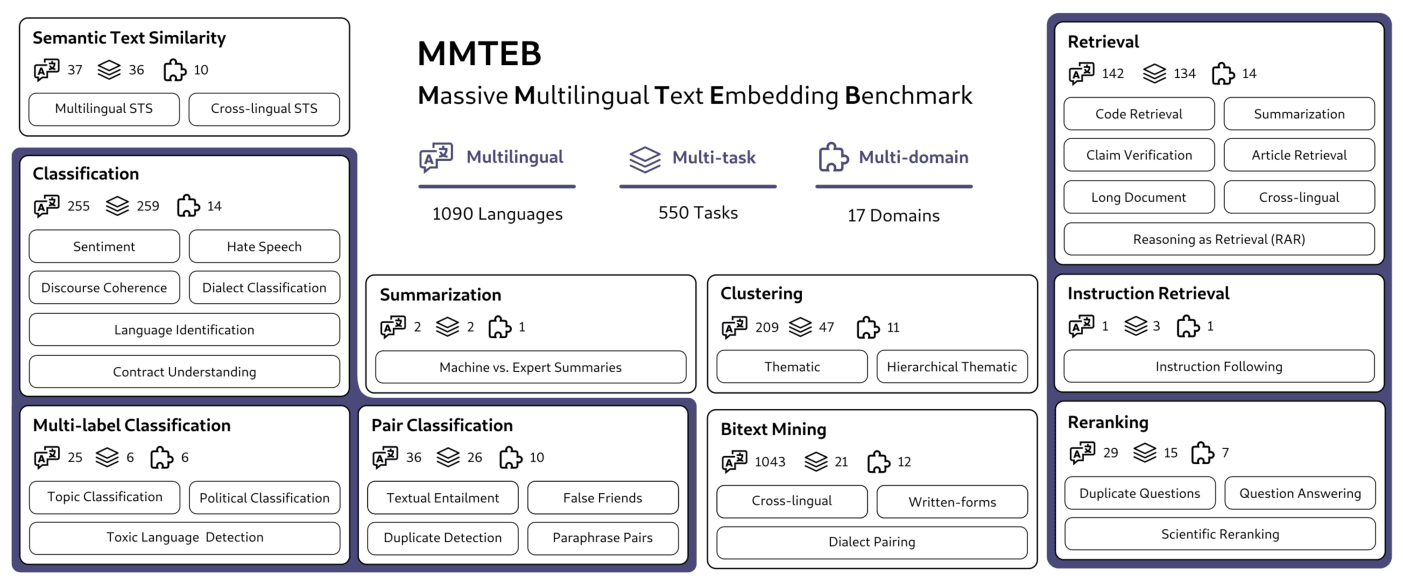
Benchmarks · Guide · Pavel Holmgren · Nov 19, 2026 · 10 min
MTEB Leaderboard Explained: How to Pick Embeddings
What the MTEB embedding benchmark actually measures, why scores differ across versions, and a five-step way to turn the leaderboard into a model you can trust for search and RAG.
Read article →
Benchmarks · Benchmark · Pavel Holmgren · Nov 19, 2026 · 11 min
Gemini 4 Neon Benchmarks: Carbon's Score, 2.5x Faster
Google's new Gemini 4 Neon costs $3 input and $15 output per million tokens and matches Gemini 4 Carbon's Artificial Analysis index score at about half Carbon's December cost per task. Here's which launch benchmarks hold up and when to route work to it.
Explore benchmark →
Benchmarks · Deep dive · Pavel Holmgren · Nov 15, 2026 · 11 min
Long-Context Benchmarks Explained: RULER, NIAH, LongBench
Needle-in-a-haystack scores say little about how well a model uses a long context. Here is what RULER, NoLiMa, MRCR, LongBench v2 and HELMET each measure, and how to test your own documents.
Read the deep dive →
Benchmarks · Analysis · Pavel Holmgren · Nov 15, 2026 · 9 min
MathArena Leaderboard: Gemini 4 Carbon Takes #1
Gemini 4 Carbon now leads MathArena at 85.4%, ahead of Claude Fable 5.2 and GPT-6.1 Sol. It costs about 15 times more per problem than Sol despite identical token prices, and its lead over Fable sits inside the confidence intervals.
Read analysis →
Benchmarks · Guide · Pavel Holmgren · Nov 12, 2026 · 11 min
How to Benchmark LLM Inference: Tools and Method
A repeatable method for load-testing LLM serving, the metrics to report (TTFT, ITL, goodput), and vllm bench serve, SGLang bench_serving, GuideLLM and AIPerf compared.
Read article →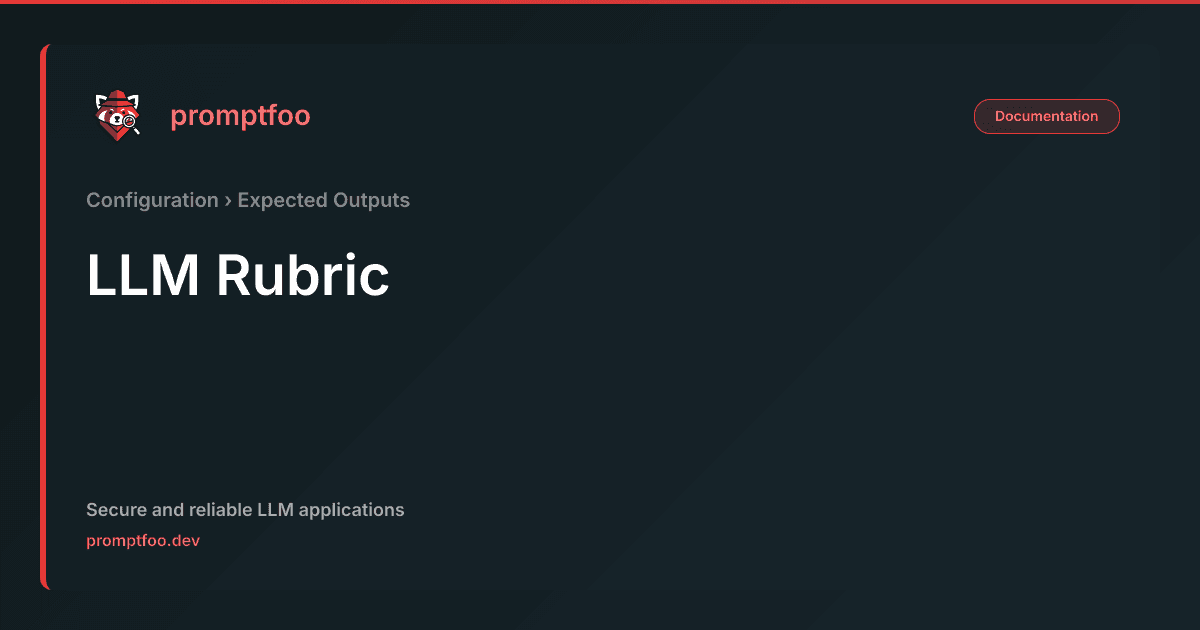
Benchmarks · Guide · Pavel Holmgren · Nov 10, 2026 · 10 min
LLM-as-a-Judge: How to Build a Grader You Can Trust
LLM judges make open-ended evals scalable, but they favour first-listed answers, longer answers and their own writing. Here is how to pick a judge format, write a rubric, and check a judge against human labels.
Read article →
Benchmarks · Guide · Pavel Holmgren · Nov 7, 2026 · 11 min
LLM Latency and Throughput Explained
This guide defines TTFT, time to first answer token, output tokens per second, and end-to-end latency the way major benches and provider docs use them. It then shows which clocks coding agents and batch jobs should optimize—and how to compare speed claims without mixing harnesses.
Read article →
Benchmarks · Comparison · Pavel Holmgren · Nov 6, 2026 · 10 min
AI Agent Benchmarks Compared: Which Ones Matter in 2026
Agent benchmarks test very different jobs, from rule-following and MCP tool use to web research and computer use. Here is what each one measures and how to read its scores.
View comparison →