Author
Pavel Holmgren
Pavel Holmgren covers the Benchmarks & Deep Dives beat for Metarix. That category is where the site publishes work that explains evaluation methods, reads public leaderboards, and unpacks comparisons that depend on numbers: model quality, latency, cost-performance, retrieval accuracy, and similar claims. He writes for readers who will use a figure in a decision and therefore need to know what was measured, on which dataset or workload, under which rules, and on which date.
Benchmark numbers travel faster than their footnotes. A vendor plot, a leaderboard screenshot, or a single headline score can hide a change of dataset, a different prompting setup, a preview model, or a metric that does not mean what it sounds like. Pavel's articles try to put the method next to the number. He would rather explain why two scores cannot be compared than produce a ranked list that looks decisive and is not.
The sources he tracks are official evaluation documentation, public leaderboards and their changelogs, dataset cards, paper and technical-report method sections, vendor benchmark posts (always attributed as vendor claims), pricing pages when a comparison includes cost, and deprecation notices that retire a model or a baseline still cited in older charts. He watches for scoring rules, contamination notes, human-evaluation protocols, and the date a leaderboard snapshot was taken. If a figure cannot be tied to a named method and a dated source, it does not appear as a hard result.
His writing voice is numbers-first and method-skeptical. He names the metric, the unit, and the dataset before he discusses a ranking. He treats vendor-reported results as claims, not as confirmed measurements, unless an independent, documented evaluation is being cited. He does not present Metarix as having rerun a benchmark or tested a model in-house unless the article records that run: the version, the date, the workload, the settings, and the limits. Documentation-based research is the usual method on this beat.
Facts are verified against primary material: the leaderboard, the paper, the dataset card, or the vendor's own evaluation write-up. Secondary summaries can point to a result; they are not the source to rewrite. Figures are published with their units, their sources, and the date they were checked. When two official leaderboards or two papers disagree, the article states the disagreement and, where possible, the methodological reason for it.
Drafting and research at Metarix may involve AI tools, including on this beat. Model output is not treated as evidence, and a generated chart is never treated as a measured result. A human editor remains accountable for the published text, the framing, and any later correction, as set out in Metarix's Editorial Standards at /editorial-standards.
When a material factual error is found, or when a leaderboard, paper, or vendor later revises a score, a method, or a retirement date, the article is updated. Material corrections receive an explicit note on the page. Smaller copy edits that do not change the facts do not. Readers can report an error or an outdated figure through the Contact page at /contact or by writing to [email protected].
On this beat he typically covers: how to read leaderboards; what a metric and dataset actually measure; when two scores cannot be compared; evaluation methods; and attributed model or tool comparisons built on published numbers.
Selected work on this beat, chosen because it shows the approach rather than because it is the newest, includes:
- Speech-to-Text Benchmarks Explained: WER, RTFx, Datasets — https://metarix.io/speech-to-text-benchmarks - How to Read LLM Leaderboards in 2026 (Without Being Misled) — https://metarix.io/how-to-read-llm-leaderboards - Structured Outputs Compared: OpenAI, Claude, Gemini, Mistral — https://metarix.io/structured-outputs-compared - Long-Context Benchmarks Explained: RULER, NIAH, LongBench — https://metarix.io/long-context-benchmarks - SWE-bench vs Terminal-Bench: What Coding Benchmarks Measure — https://metarix.io/swe-bench-vs-terminal-bench
Benchmarks · Guide · Pavel Holmgren · Nov 5, 2026 · 4 min
Cheap Model or Expensive Model? Measure Cost per Successful Task
Compare total cost divided by verified successes. Include failed attempts, retries, routing and tools before deciding that a cheaper token rate saves money.
Read article →
Benchmarks · Guide · Pavel Holmgren · Nov 3, 2026 · 6 min
How to Read LLM Leaderboards in 2026 (Without Being Misled)
Arena votes, single benchmarks and composite indexes measure different things. Here is how to read scores, setups, ties and cost before you pick a model.
Read article →
Benchmarks · Analysis · Pavel Holmgren · Nov 2, 2026 · 9 min
DeepSeek Search API Pricing: Cheap, but Is It Good?
DeepSeek started billing Search and Fetch calls on Nov 1 at $0.75 per 1,000. It is the cheapest paid search API on the Artificial Analysis board, but its results make the answer model work harder.
Read analysis →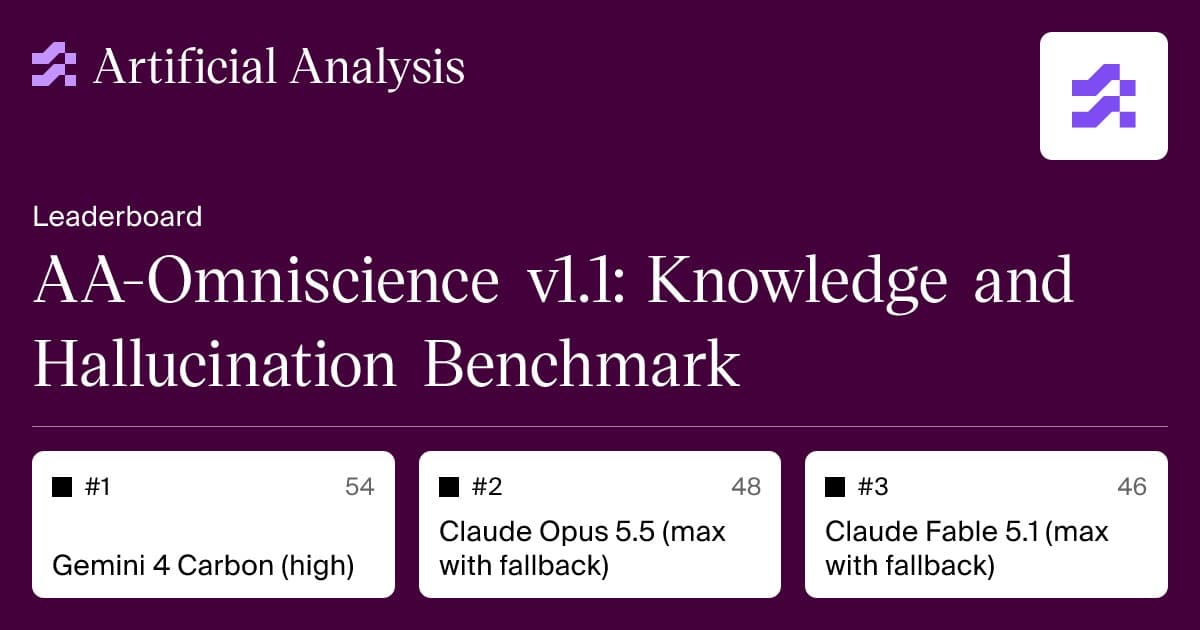
Benchmarks · News · Pavel Holmgren · Nov 1, 2026 · 9 min
AA-Omniscience v1.1: Which LLMs Hallucinate Least
Artificial Analysis refreshed its hallucination benchmark. Gemini 4 Carbon leads Net Score, Claude tops accuracy, and a new 300-question public set lets you test your own models.
Read article →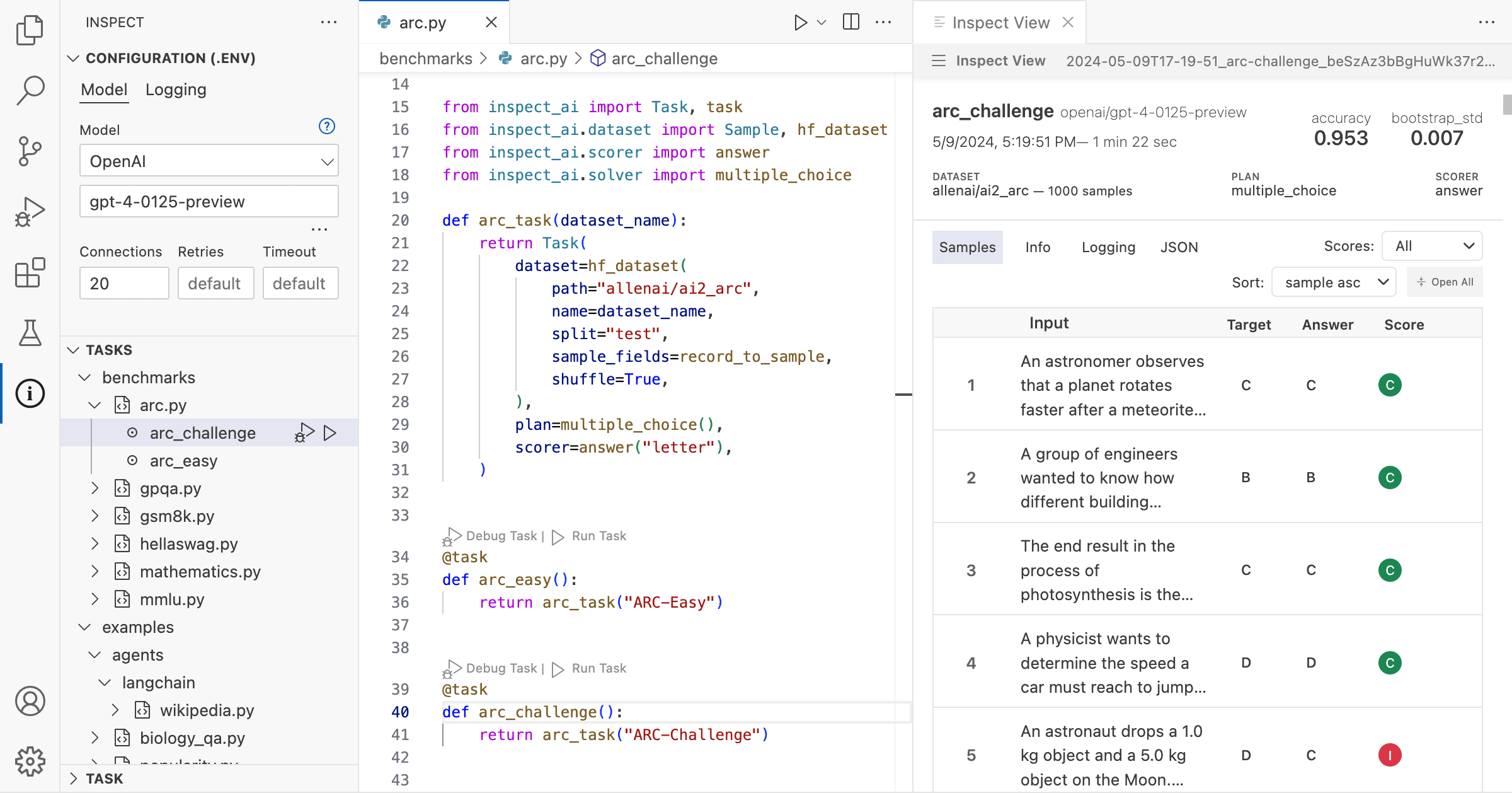
Benchmarks · Guide · Pavel Holmgren · Oct 31, 2026 · 10 min
Build LLM Evals: Promptfoo vs Inspect
A practical guide to building a private LLM eval suite with Promptfoo or Inspect, plus how to move off OpenAI Evals before its Nov 30 shutdown.
Read article →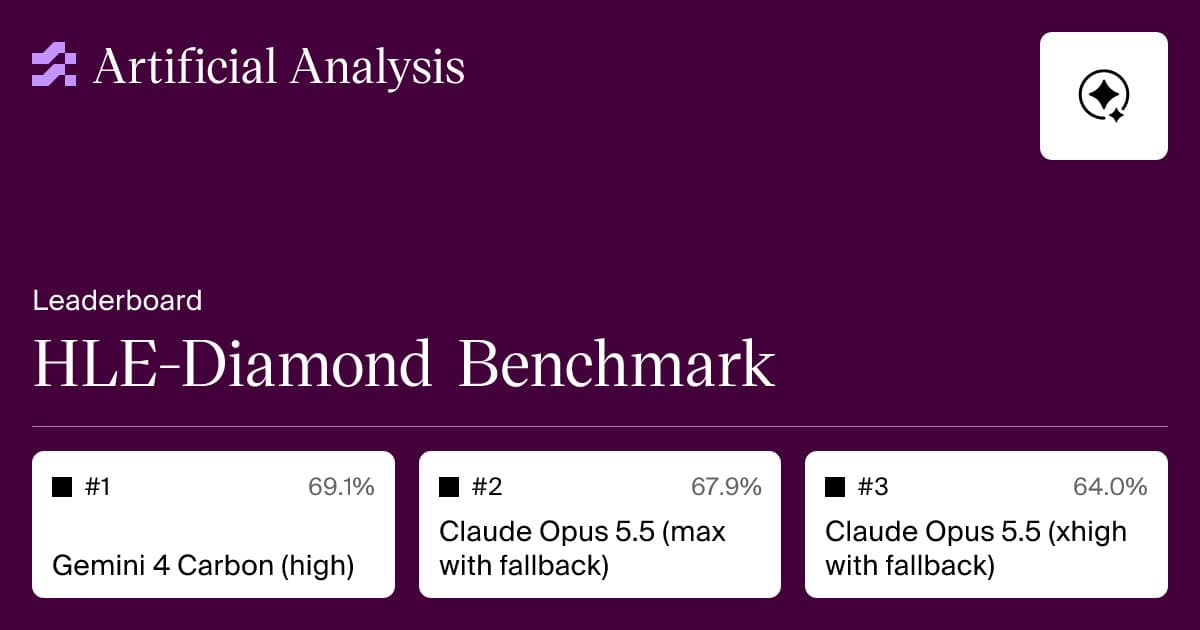
Benchmarks · News · Pavel Holmgren · Oct 31, 2026 · 5 min
HLE-Diamond’s New Leader Is a Model You Can’t Call Yet
Artificial Analysis launched its HLE-Diamond leaderboard. Gemini 4 Carbon leads at 69.1% but has no public API; Opus 5.5 is the top model you can use today.
Read article →
Benchmarks · Comparison · Pavel Holmgren · Oct 29, 2026 · 8 min
Best Open-Weight Coding Models in 2026, Compared
Kimi K3.1 Pro, Mistral Large 4, DeepSeek V4.1 Flash and Qwen3.8 compared on agentic coding benchmarks, licenses, prices and self-hosting, with every score attributed.
View comparison →
Benchmarks · Analysis · Pavel Holmgren · Oct 27, 2026 · 8 min
GPT-6.1 Terra Pricing and Benchmarks for Developers
OpenAI's GPT-6.1 Terra costs $1 input and $5 output per million tokens, half of GPT-6.1 Sol, and shipped Oct 26 in the API, Codex, GitHub Copilot and Amazon Bedrock.
Read analysis →
Benchmarks · Benchmark · Pavel Holmgren · Oct 25, 2026 · 12 min
SWE-bench vs Terminal-Bench: What Coding Benchmarks Measure
SWE-bench grades patches against a repo's own tests; Terminal-Bench grades whole jobs done in a shell. Here is what each measures, why both were shaken up in 2026, and how to read a score.
Explore benchmark →
Benchmarks · Benchmark · Pavel Holmgren · Oct 6, 2026 · 5 min
Mistral Named the Trillion-Param Model Le Chonk
1 trillion parameters, 49 billion active, trained on 3,800 GB200s in Europe. Preview API today. Weights released October 29. Cyber is the pitch.
Explore benchmark →
Benchmarks · Analysis · Pavel Holmgren · Sep 18, 2026 · 4 min
Claude Now Does a Quarter of Anthropic's Work
As of August, Claude leads 26% of Anthropic's AI research work. Humans still watch. Nothing runs fully on its own. The useful part is the dashboard, not the headline.
Read analysis →
Benchmarks · Benchmark · Pavel Holmgren · Sep 17, 2026 · 3 min
Agents Get a Trustmark
AIUC-1 is trying to be SOC 2 for agents: thousands of evals, a certificate, and now a $40M Series A to sell audits and insurance. A badge is not a kill switch.
Explore benchmark →