AI Agents & Coding · Paid
Gemini 4 Carbon
Gemini 4 Carbon is Google DeepMind's strongest Gemini model, built for long-horizon agentic work: complex multi-step software engineering, root-cause debugging across large codebases, dense multimodal knowledge work, scientific reasoning and cybersecurity defense. Google announced it on October 28, 2026, first released it to vetted cyber defenders through its Fairwind Program, and made it generally available to developers, enterprises and Google AI Ultra subscribers on November 10, 2026. Google's model card says Carbon is based on Gemini 4 Argon, the efficient Gemini 4 model launched in October 2026. The main practical difference is that Carbon spends more thinking tokens per turn to explore, reason and verify its work, which raises latency and token use compared with Argon.
Who it is for: engineering teams and technical founders who run hard, open-ended tasks where accuracy matters more than speed, such as architectural redesigns, multi-package migrations, security audits and research agents. Google recommends Argon for most day-to-day software engineering and knowledge work, and positions Carbon for the planner, coordinator and verifier roles in multi-agent systems such as the /swarm preview in Google Antigravity.
Key features: - Model ID gemini-4-carbon on the paid tier of the Gemini API and in Google AI Studio; also available in Gemini for business and Gemini Enterprise Agent Platform on Google Cloud. - A unified 1,048,576-token context window shared by input, thinking and output, with long decode beyond 64K output tokens through background execution. - Thinking levels low, medium (default) and high, all at the same per-token price. - Code execution, computer use, function calling, structured outputs, file search, URL context and grounding with Google Search and Google Maps. - Implicit context caching only, with cached input discounted 95%; explicit caching is not supported, and temperature, top_p and top_k are ignored. - Batch, Flex and Priority inference options. - Available in third-party tools including GitHub Copilot, Cursor, Perplexity and Vercel AI Gateway.
Pricing type: paid. Carbon is not on the Gemini API free tier. Through November 30, 2026, Google charges an introductory $2 per million input tokens and $10 per million output tokens, including thinking tokens, the same as Gemini 4 Argon. From December 1, 2026, the price is $4 input and $20 output. Batch and Flex cost half of Standard, Priority costs 1.8 times Standard, and non-global endpoints on Google Cloud carry a 10% premium. Grounding with Google Search is billed per query after 5,000 free requests a month.
Alternatives: Gemini 4 Argon for faster, cheaper turns; Anthropic's Claude Opus 5.5 and Claude Fable 5.2; OpenAI's GPT-6 models; and open-weight models such as DeepSeek V4.1 for self-hosting or lower costs.
Official URL: https://aistudio.google.com/docs/whats-new-gemini-4-carbon
Benchmarks · Analysis · Metarix Editorial · Nov 15, 2026 · 9 min
MathArena Leaderboard: Gemini 4 Carbon Takes #1
Gemini 4 Carbon now leads MathArena at 85.4%, ahead of Claude Fable 5.2 and GPT-6.1 Sol. It costs about 15 times more per problem than Sol despite identical token prices, and its lead over Fable sits inside the confidence intervals.
Read analysis →
SaaS · Analysis · Metarix Editorial · Nov 13, 2026 · 10 min
Gemini 4 Hydrogen Pricing: Twice Flash's Rate, Less per Task
Gemini 4 Hydrogen costs $1.50 per million input tokens and $7.50 per million output, double Gemini 3.8 Flash's rate until Flash matches it on January 1, 2027. Artificial Analysis estimates it costs far less per task. Here are the tiers, the numbers and the migration traps.
Read analysis →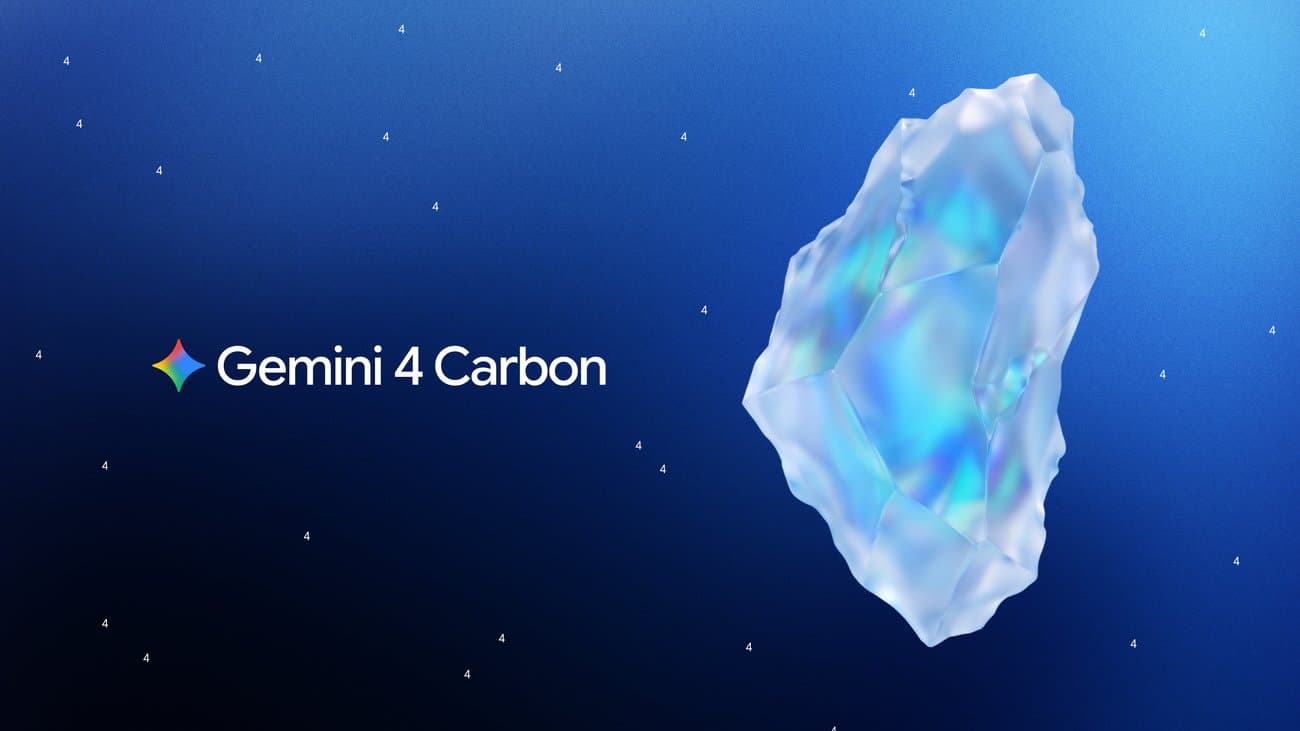
SaaS · Analysis · Metarix Editorial · Nov 11, 2026 · 10 min
Gemini 4 Carbon Pricing: Argon's Rate, Not Argon's Bill
Google priced Gemini 4 Carbon exactly like Argon: $2/$10 per million tokens until Nov 30, then $4/$20. But Carbon thinks longer, so cost per task differs. Here is the math, the Claude comparison and when to route to Carbon.
Read analysis →
Cloud · Comparison · Metarix Editorial · Nov 10, 2026 · 13 min
AWS Bedrock vs Google Vertex AI: Cloud AI Platforms Compared
Google folded Vertex AI into Gemini Enterprise Agent Platform in April 2026. Here is how it compares with Amazon Bedrock on models, pricing tiers, RAG, agents and guardrails, with list prices as of Nov 11.
View comparison →