Company
NVIDIA
NVIDIA is the US company that designs the GPUs, networking and software most AI training and inference runs on. For developers building with AI, its relevance goes beyond hardware: NVIDIA maintains a large stack of software that decides how fast and how cheaply models run on its chips.
The base layer is CUDA, NVIDIA's parallel computing platform and programming model, along with libraries such as cuDNN and the TensorRT inference optimizer. On top of that, NVIDIA builds open-source projects for large language model serving. TensorRT-LLM is its library for optimizing LLM inference on NVIDIA GPUs, with custom kernels, quantization recipes, speculative decoding and disaggregated serving, served through the OpenAI-compatible trtllm-serve command. NVIDIA Dynamo is an open-source inference framework for distributed serving; its documentation says it works with vLLM, SGLang and TensorRT-LLM as engines and adds disaggregated serving, KV-aware routing, cache management and autoscaling on Kubernetes, Slurm or a single machine. Triton Inference Server is NVIDIA's general-purpose model server, and Model Optimizer produces quantized checkpoints in formats such as FP8 and NVFP4 that inference engines can load directly.
NVIDIA also packages models as NIM microservices and publishes optimized and pre-quantized model checkpoints on Hugging Face. Its GPU lineup for data centers includes the Ampere, Hopper and Blackwell generations, including rack-scale systems such as GB200 NVL72, which TensorRT-LLM's support matrix lists among supported hardware.
Why it matters for builders: the choice of GPU generation, numeric precision and serving engine on NVIDIA hardware drives latency, throughput and cost per token for self-hosted models. Most open-source inference engines, including vLLM and SGLang, support NVIDIA GPUs as their primary platform while adding AMD and other accelerators.
Pricing type: NVIDIA's inference software discussed here (TensorRT-LLM, Dynamo, Triton) is open source and free to use; GPUs are bought directly or rented through cloud providers, and some enterprise software and support is sold separately under NVIDIA AI Enterprise.
Alternatives and competitors in AI accelerators include AMD, Intel, Google (TPUs) and AWS (Trainium and Inferentia). Official site: https://www.nvidia.com (developer resources at https://developer.nvidia.com).
Benchmarks · Deep dive · Metarix Editorial · Nov 15, 2026 · 11 min
Long-Context Benchmarks Explained: RULER, NIAH, LongBench
Needle-in-a-haystack scores say little about how well a model uses a long context. Here is what RULER, NoLiMa, MRCR, LongBench v2 and HELMET each measure, and how to test your own documents.
Read the deep dive →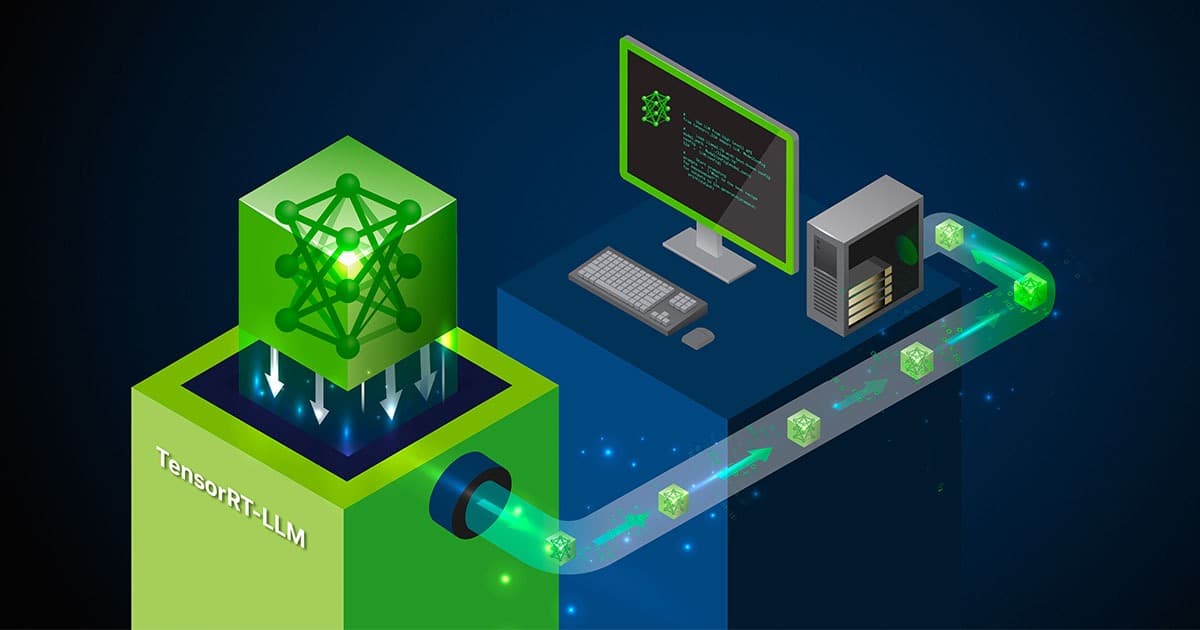
Cloud · Comparison · Metarix Editorial · Nov 14, 2026 · 11 min
vLLM vs SGLang vs TensorRT-LLM: Which to Use
The three leading open-source LLM inference engines compared on hardware, prefix caching, disaggregated serving and release churn, with setup commands and a clear pick for each situation.
View comparison →